 Hrvatski
 English
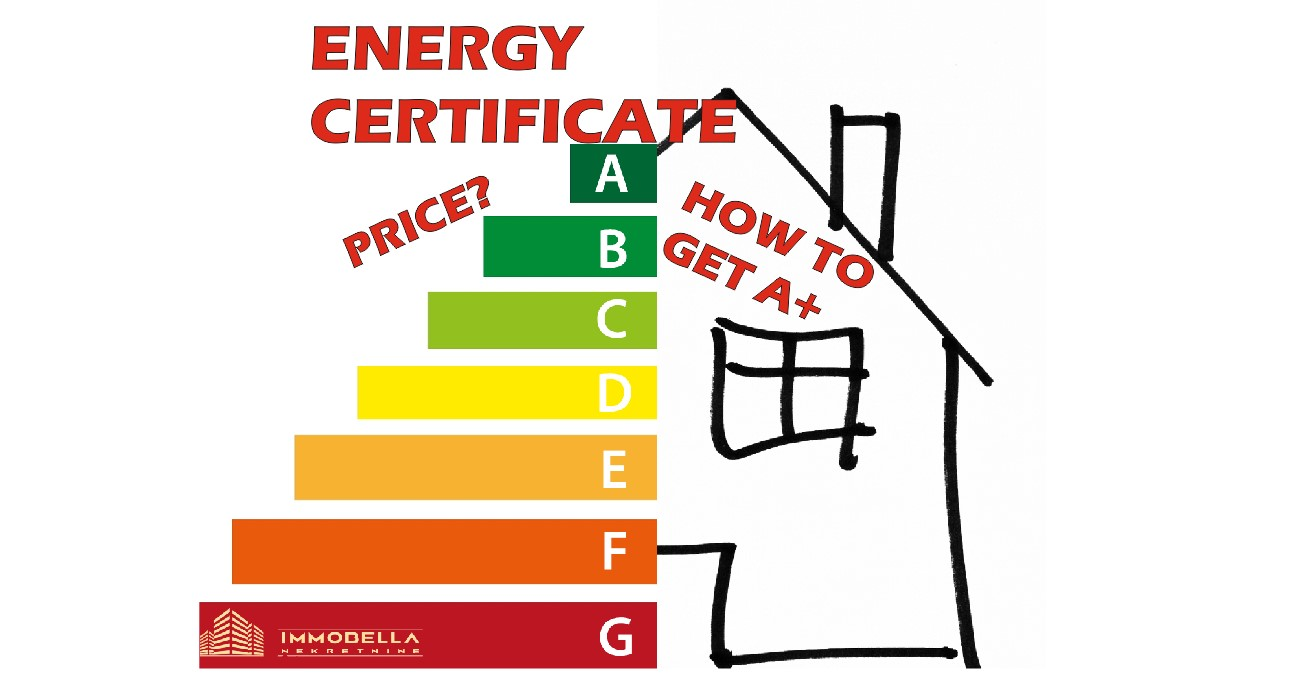
70% of apartment and house owners in Croatia don’t know that an Energy Certificate is not a recommendation, but a legal obligation when selling or renting. Due to a lack of information, many pay unnecessarily high heating bills or simply miss the opportunity to increase the value of their property by 10-15%. This is a complete guide that covers everything you need to know – from the actual costs to the specific steps on how to achieve energy class A+.
What is an Energy Certificate and why is it important?
An Energy Certificate is an official document that classifies a property according to its energy efficiency characteristics – from A+ (best) to G (worst). The certificate was introduced in 2013 by the Energy Efficiency of Buildings Act to reduce energy consumption, which accounts for 40% of total consumption in the European Union.
Key fact: The certificate directly affects the market value of your property. Houses and apartments with class A or B are sold for 10 – 15% higher than the average price. For a property worth €150,000, this means an additional €15,000 – €22,500.
How much does an Energy Certificate cost?
The price of an Energy Certificate varies depending on the location, type and size of the property:
- Apartment up to 100 m²: €200-300
- House up to 200 m²: €350-450
- Larger buildings: €500-600
What affects the price of an Energy Certificate? Availability of technical documentation. If you do not have it, the certifier must perform thermal imaging measurements, which increases the price by an additional €100-150. Prices in Zagreb and at the seaside can be 20-30% higher. Urgent production of a certificate (7 days) increases the price by 30-50%.
The price is paid to the authorized certifier, not the state, and includes VAT.
How long does the certificate last and when is it mandatory?
The Energy Certificate is valid for 10 years from the date of issue. If you continue to sell or rent after this period has expired, you must obtain a new one.
The certificate is legally required for:
- Sale of any Real Estate
- Renting Real Estate (rent for more than a year)
- New buildings – part of the occupancy permit
- Significant renovation (more than 50% of the value of the building)
- Buildings with more than 4 apartments – for common areas
Fines for non-issue amount to €3,000-€30,000 for natural persons, and up to €100,000 for legal entities.
How to get an A+ class in 30 days: Step by step
Class A means that the property has a heating energy consumption of less than 15 kWh/m² per year. Achieving this class requires a combination of several measures.
Phase 1: Preparation and documentation (5-7 days)
Collect:
- Master plan of the building (if any)
- Information about woodwork, walls, roof
- Utility bills for the past 3 years
If there is no documentation: The certifier will perform thermal imaging measurements (additional cost €100-150).
Phase 2: Certificate creation (15-20 days)
The certifier calculates energy efficiency using software (BHFS, CEKAS). The certificate contains the energy class, CO₂ emissions and recommendations for improvement.
Critically: Certifier cannot give an A+ class if the object does not objectively deserve it.
Phase 3: Registration (3-5 days)
The finished certificate is registered in the Register of Energy Certificates. You get a paper original and a PDF version.
Total time: 20-30 days from the gathering of complete documentation.
A+ Class Checklist: What You Need
For A + class your property must have:
Thermal insulation:
- Facade R ≥ 5.0 m²K/W (15-20 cm of graphite EPS)
- Triple-glazed windows (U ≤ 0.8 W/m²K)
- Roof R ≥ 6.0 m²K/W (20-25 cm mineral wool)
- Floor in the field R ≥ 4.0 m²K/W
Installations:
- Heat pump (COP ≥ 4.0)
- Ventilation with heat recovery (η ≥ 85 %)
- Solar panels for hot water (cover ≥ 50% of needs)
Documentation:
- Land registry extract (not older than 6 months)
- Project or thermal imaging
Reality: An average Croatian house from the 1980’s without significant renovation can only get a C class at most.
The most effective measures for jumping to a better class
If you have a D, E or F class, here are the wisest investments:
| Measure | Investment | Saving | Class jump |
| Facade renovation (10 cm EPS) | 80-120 €/m² | 30-40% | E → C |
| Replacement of window joinery (triple glazing) | 400-600 €/m² | 15-20% | D → C |
| Heat pump | €8,000-12,000 | 60-70% gas | C → B |
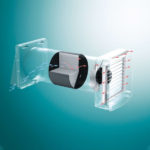
| Ventilation with recovery | €3,000-5,000 | 30% heating | B → A |
The best combination: facade + carpentry + heat pump = a jump of 2-3 classes with a return on investment in 3-5 years.
Apartment Certificate: Special Features
For apartments, the certificate can be issued for the entire building or for an individual apartment. If the building was built before 1987, it will probably have an F or G class, regardless of the internal renovation of your apartment. The certifier must also take into account the common parts (facade, roof).
Solution: Agree with your neighbors to renovate the facade before selling – it’s the only way to raise the class of the entire building.
Frequently asked questions
- Do I need an Energy Certificate for a donation of Real Estate?
Not. It is mandatory only for sale, rental, new construction and significant renovation. - Can I create an Energy Certificate myself?
No. It must be issued by an authorized certifier entered in the Register. - How long does the procedure take?
20-30 days from the completion of the documentation. With extra charge, possible in 7-10 days. - What if I don’t have all the documentation?
The certifier will perform the measurements, but the price will be 30-40% higher. - Can the Energy Certificate be transferred to a new owner?
Yes, if still valid (within 10 years). - Is the A+ class worth the investment?
If you sell in the next 5 years, every euro invested will be returned twice as much through a higher selling price.
Conclusion: A certificate is an investment, not an expense
An Energy Certificate is a legal requirement that you should not ignore, but also a tool that can increase your property’s value. Buyers today are looking for energy-efficient homes, and an A + rating is your passport to a faster sale and a better price.
IMMOBELLA recommendation: Before issuing the certificate, do an energy audit. An expert will tell you which measures bring the biggest jump for the least amount of money – the smartest investment before any work.
Join The Discussion